

CJI Surya Kant’s Refusal to Meet Rahul Gandhi, Mallikarjun Kharge: Know What Exactly Happened
 Copy Link
 Share
 Save
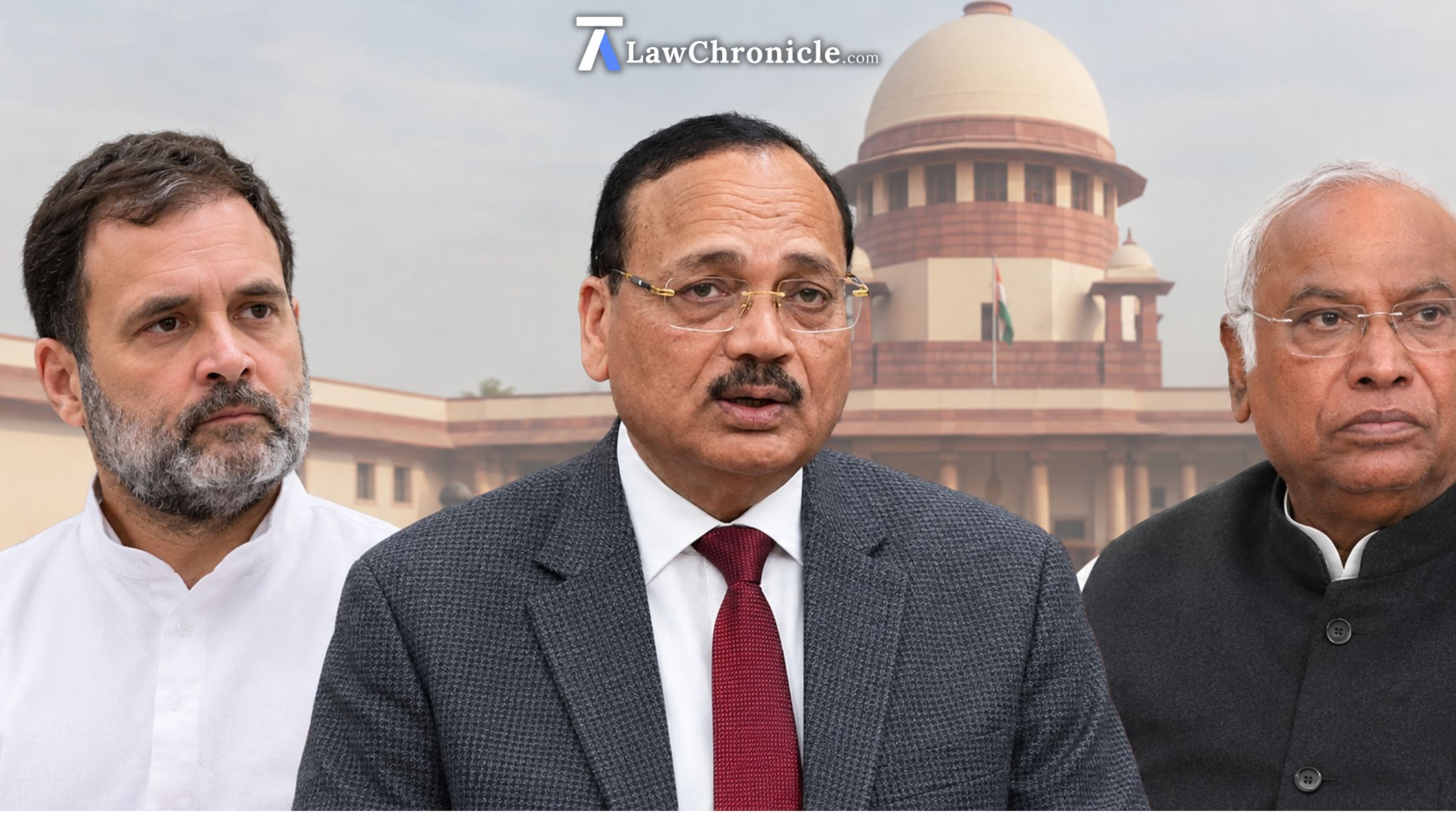
Chief Justice of India (CJI) Surya Kant has reportedly declined a request from Leader of the Opposition in the Lok Sabha, Rahul Gandhi and Leader of the Opposition in the Rajya Sabha, Mallikarjun Kharge, for a meeting on 12th October 2026. According to sources aware of the development, the CJI said the issues were already sub judice (pending before a court), and that the Supreme Court has no administrative power to interfere with the functioning of the government. This article delves into the recent developments and the law behind them.
CJI’s Meeting with Opposition Leaders
As per News Reports, Rahul Gandhi on 11th October announced that Opposition parties would march to the Supreme Court the next day. They planned to present a memorandum to the CJI seeking a rollback of the Special Intensive Revision (SIR) of electoral rolls and the resignation of Chief Election Commissioner Gyanesh Kumar. Mallikarjun Kharge announed the same to convey that the said a meeting with the CJI had been scheduled between 4 PM and 5 PM on 12th October, 2026.
The plans came amid Opposition allegations of electoral irregularities, the SIR exercise, and recent police action against protesters in Delhi.
CJI’s Response to Meeting Claims
According to sources, the CJI replied to the official email sent by the two leaders. The reported points are:
- The matters are sub judice: The issues the leaders wished to raise are already pending before the Supreme Court, so a meeting would be inappropriate.
- No Administrative Power over the Executive: Under the constitutional scheme, the Supreme Court cannot interfere with the functioning of the government on its administrative side. It therefore cannot pass directions on a memorandum.
- The Judicial side remains open: The leaders are free to approach the Court through a petition.
- A hearing is already listed: Similar matters on the SIR exercise are listed for Tuesday, 13th October. A petition filed by Opposition members could be heard along with them.
- No view on the march: Sources clarified that the CJI has not expressed any opinion on the proposed march to the Supreme Court.
The Supreme Court is already seized of related issues. A bench led by the CJI upheld the Election Commission’s power to conduct the SIR in May 2026. The same bench is also hearing petitions challenging decisions of the Chief Election Commissioner that are alleged to have been taken without the concurrence of the other Election Commissioners.
Administrative Side and Judicial Side of the Supreme Court
The Supreme Court acts in two capacities:
- Judicial side: The Court hears and decides cases. Articles 32 and 136 are the routes by which citizens and parties reach it. Both sides are heard, and orders are passed in open court on the record.
- Administrative side: The Chief Justice manages the institution. This covers the roster (allocation of cases to benches), staff and rules under Articles 145 and 146, and consultation on judicial appointments under Article 124(2).
Nothing in the Constitution gives the Supreme Court’s administrative side any supervisory control over the Union Executive or the Election Commission. A memorandum to the CJI personally therefore has no constitutional machinery to act on it. Only a case can produce an enforceable order.
Why sub judice matters
Sub judice is a principle of fairness rather than a single constitutional article. The principle signifies that a matter under adjudication should not be discussed privately with one side. The Restatement of Values of Judicial Life, adopted by the Supreme Court’s Full Court in 1997, says judges should not express views on matters pending or likely to arise for judicial determination. Section 2(c) of the Contempt of Courts Act, 1971 also treats interference with the due course of judicial proceedings as criminal contempt.
A private meeting between the presiding judge and one side on a pending matter would sit uneasily with the principle of audi alteram partem (hear the other side). The Union government and the Election Commission are respondents in those matters.
Has a CJI ever sat with the government or the Opposition?
The Constitution does not provide for a CJI to meet political parties on a live political dispute. There is no express or established convention available for the same. The recorded interactions between the CJI and the government are institutional or statutory. There are certain Constitutional Institutions which the Judges may be part of, as reflected below:
- Statutory Selection Committees: The CJI, or a Supreme Court judge nominated by the CJI, sits with the Prime Minister and the Leader of the Opposition on the committee that selects the CBI Director. The Lokpal Selection Committee has a similar composition. This is the clearest case of the CJI and the Leader of the Opposition sitting together, and it is prescribed by law for a defined purpose.
- Election Commission appointments: In Anoop Baranwal v. Union of India (2023 CaseBase(SC) 186), a Constitution Bench directed that the CEC and Election Commissioners be appointed on the advice of a committee of the Prime Minister, the Leader of the Opposition and the CJI, until Parliament legislated. Parliament then enacted the Chief Election Commissioner and Other Election Commissioners (Appointment, Conditions of Service and Term of Office) Act, 2023. That Act replaced the CJI with a Union Cabinet Minister nominated by the Prime Minister.
- Consultation on Judicial Appointments: The government consults the CJI on appointments under Article 124(2). It also seeks the outgoing CJI’s recommendation for a successor.
- Conferences: The CJI has shared the stage with the Prime Minister and Chief Ministers at the Joint Conference of Chief Ministers and Chief Justices of High Courts.
- Controversy over Informal Contact: In September 2024, a visit by the Prime Minister to the then CJI’s residence for a religious event drew criticism from Opposition leaders. Prime Minister Narendra Modi had visition Former CJI DY Chandrachud’s residence for Ganesh Chaturthi celebrations.
- Past routes for grievances against the Judiciary: In January 2018, four senior Supreme Court judges addressed a Press Conference about the CJI’s powers as Master of the Roster. In April 2018, Opposition parties submitted a notice for a removal motion against then CJI Dipak Misra to the Chairman of the Rajya Sabha, not to the CJI. That is the route set by Article 124(4) and the Judges (Inquiry) Act, 1968.
- The June 2026 Memorandum: Earlier this year, 23 Opposition parties and an independent Rajya Sabha MP sent a joint memorandum to the CJI on the SIR and related election issues. It was made public in early July. The All India Bar Association objected publicly, saying the CJI is not the Administrative Head of the Election Commission and that grievances should go through court proceedings.
The President’s Questions to the Supreme Court: Article 143
The Constitution of India does provide a route by which the highest executive can seek the Court’s views outside a regular case. It is Article 143, the advisory jurisdiction.
- Article 143(1): The President may refer to the Supreme Court a question of law or fact of public importance. The Court “may” give its opinion.
- Article 143(2): For certain pre-Constitution treaty and similar disputes, the Court “shall” give its opinion.
- Article 145(3): Such references are heard by a bench of at least five judges, in open court, with the parties heard.
- Who triggers it: The President acts on the aid and advice of the Council of Ministers under Article 74. In practice, the Union executive initiates a reference. Opposition parties and private litigants cannot invoke Article 143.
- Nature of the opinion: It is advisory and not a judgment between parties. It carries great persuasive weight but is not a decree.
- The Court can decline: In the Ayodhya reference vide Dr. M. Ismail Faruqui v. Union of India, (1994 CaseBase(SC) 506), the Court returned the question unanswered.
- A recent example: On 20 November 2025, a Constitution Bench headed by then CJI B.R. Gavai gave its opinion on a reference by the President concerning timelines for Governors and the President to act on State Bills.
The structure is deliberate. Article 143 is a formal, on-the-record, five-judge process initiated by the President. It is not a private channel for any political party.
Routes Open to the Opposition
- Writ petition: Under Article 32, or intervention in the pending SIR and CEC matters. This is the route the CJI reportedly pointed to.
- Parliament: Under Article 324(5), the Chief Election Commissioner can be removed only in the same manner and on the same grounds as a Supreme Court judge. That is a motion in Parliament, not a decision of the CJI.
- Memorandum to the President or a representation to the Election Commission: Both are political routes, and neither creates a judicial remedy.
The Aftermath
CJI Suryakant has been the center of discussion for quite sometime, and the chain of sequence began with his Cockroaches remark. Now that there are reports of CJI refusing to meet Leaders of Opposition, suggesting them to approach the Court judicially, this has given rise to another pumped discussion. Now, the Supreme Court’s action in the matters pending before it has all the eyes, as to which direction the CEC protest heads to.
 Breaking News