

Contract not Finalised Until Execution of Conveyance Deed: Supreme Court
 Copy Link
 Share
 Save
The Supreme Court has reaffirmed that public authorities possess the statutory power to recall or revisit an auction process to maximize revenue for public property right up until the final conveyance deed is executed. Reaffirming this fundamental principle of administrative law, the Apex Court ruled that an accepted highest bid under an agreement to sell does not create an enforceable contract if the governing framework conditions permit withdrawal before formal transfer.
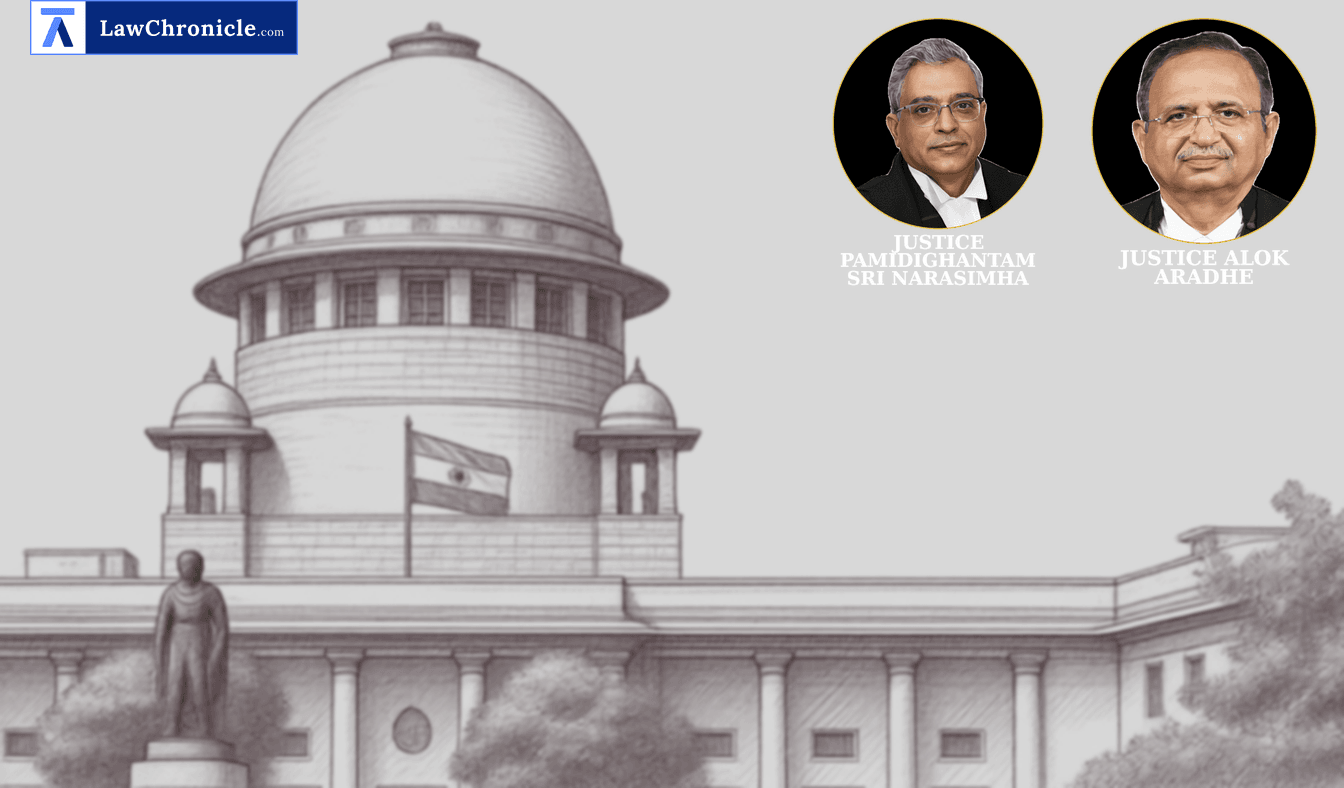
A Division Bench comprising Justice Pamidighantam Sri Narasimha and Justice Alok Aradhe set aside a Punjab and Haryana High Court judgment that had quashed the cancellation of a tender bid by the Chandigarh Administration. The dispute centered around the e-auction of a prime commercial plot where a substantial price disparity prompted the authorities to call for fresh bidding.
Key Takeaways
Pre-Conveyance Cancellation Valid
State authorities can revisit public property e-auctions to ensure price discovery and revenue maximization before a formal conveyance deed is executed.
Agreement to Sell Not Binding Contract
An agreement to sell under auction rules does not constitute an enforceable contract under the Indian Contract Act, 1872 until all statutory prerequisites, including the allotment letter and conveyance deed, are completed.
Public Interest Supersedes Expectation
Fetchable market value overrides the mere expectation of a preliminary highest bidder, provided the cancellation is transparent and non-arbitrary.
Impact on Administrative Auctions
Ensures public treasuries are not bound by suboptimal bids where adjacent properties demonstrate significantly higher market trends.
Evaluating the regulatory provisions governing the transaction, the Supreme Court observed that the statutory mechanism clearly delineated the stages of auction, deposit, agreement to sell, and the eventual conveyance deed. The Apex Court held that until the process culminates in the execution of the conveyance deed, the competent authority retains the power to withdraw or cancel the auction process.
The Bench discussed the basics of law of contract that "An agreement enforceable in law alone is a contract. Such an enforceable agreement, in the present case, will come into existence only upon execution of the conveyance deed. Execution of the conveyance deed is the culmination of the process by which the promise, the offer, acceptance, payment of consideration, and execution of an Agreement to Sell are complete. An Agreement to Sell contemplated under Rule 5(iv) of the Chandigarh Estate Rules, 2007 in itself is not an enforceable contract under Section 2(h) of the Indian Contract Act, 1872. As the conveyance deed is not yet executed, the Chandigarh Administration will be in a position to exercise its power under Rule 5(vi) read with Explanation I of the Chandigarh Estate Rules, 2007 or under Clauses VI(1) and VI(5) of the General Terms and Conditions of E-Auction dated 31.08.2022."
Addressing the validity of state action in public property sales, the Supreme Court distinguished the case from precedents where state action was struck down for arbitrary cancellations without fair notice or natural justice. Paraphrasing the principle laid down in Chairman and Managing Director, SIPCOT, Madras & Ors. v. Contromix Pvt. Ltd., the Supreme Court highlighted that the primary objective in disposing of public property is to secure the highest possible value, which is best achieved through public participation. Conversely, the Bench distinguished decisions like Vice-Chairman and Managing Director, City and Industrial Development Corporation of Maharashtra Limited and Another v. Shishir Realty Private Limited and Others and Golden Food Products India v. State of Uttar Pradesh & Ors. ( "2026 SCC OnLine 24": 2026 CaseBase(SC) 63), noting that in the present matter, full refunds were promptly processed and clear reasons reflecting market trends were communicated without violating natural justice principles.
Therefore, the Apex Court directed the Chandigarh Administration to hold a fresh e-auction for Site No. 4 in Sector 33C, Chandigarh, by following the procedure prescribed under the Chandigarh Estate Rules, 2007.
Ratio
An Agreement to Sell executed prior to the issuance of an allotment letter and execution of a Conveyance Deed under statutory auction rules does not constitute an enforceable contract under Section 2(h) of the Indian Contract Act, 1872. Public authorities retain the statutory right to cancel or revisit the auction process to maximize revenue for public property before the final execution of the conveyance deed, provided such action is transparent and free from arbitrary discrimination.
Background
The Chandigarh Administration issued an e-auction notice on August 31, 2022, for selling commercial and nursing home sites on a freehold basis under the Capital of Punjab (Development and Regulation) Act, 1952 and the Chandigarh Estate Rules, 2007. The controversy arose over Nursing Home Site No. 4 in Sector 33C, Chandigarh, with a reserve price of Rs 6.91 Crores. M/s Bedi Hospital emerged as the highest bidder for Site No. 4 with an offer of Rs 12.58 Crores and deposited the requisite amounts, leading to the execution of an Agreement to Sell. However, adjacent Site No. 3 of identical size fetched Rs 18.25 Crores on the same day.
Realizing the stark price difference of over Rs 6 Crores, the Chandigarh Administration cancelled the bid contract and the Agreement to Sell for Site No. 4 on January 27, 2023, and February 9, 2023, citing the bid was not reflective of market trends, and refunded the deposited funds while permitting M/s Bedi Hospital to join fresh auctions. M/s Bedi Hospital challenged the cancellation before the Punjab and Haryana High Court. In interim orders, the High Court permitted re-auction proceedings, during which the appellant, Satinder Pal Singh, emerged as the highest bidder at Rs 18.30 Crores. Despite the subsequent auction fetching significantly higher revenue, the High Court ultimately allowed the writ petition and quashed the cancellation letters. The appellant and the Chandigarh Administration then appealed to the Supreme Court, which set aside the High Court's ruling and ordered a fresh e-auction.
Case Details:
Case No.: Civil Appeal No(s). of 2026 (@ Special Leave Petition No. 33791 of 2025)
Neutral Citation: 2026 INSC 1142
Case Title: Satinder Pal Singh & Ors. v. Bedi Hospital & Ors.
Appearances:
For the Petitioner(s): Mr. Guru Krishna Kumar, Senior Advocate; Mr. Vikramjit Banerjee, ASG
For the Respondent(s): Mr. P.S. Patwalia, Senior Advocate
Source: 2026 CaseBase(SC) 8282
 Breaking News